Sourcing hamster supplies from China can dramatically reduce your product costs while maintaining quality, if you know the process. This guide walks Southeast Asian pet retailers through every step, from finding suppliers to receiving your first shipment.
Why Source from China?
China manufactures over 80% of the world’s small animal accessories. From ceramic hideouts to silent exercise wheels, the production ecosystem in Guangdong and Zhejiang provinces is unmatched. For Southeast Asian retailers, the proximity means shorter shipping times (5-10 days by air) and lower freight costs compared to sourcing from Europe or North America.
Finding Reliable Suppliers
Vetting Your Supplier: Never skip due diligence. Request: (1) Business license and export certificate, (2) Recent SGS or ITS test reports, (3) References from 2-3 existing overseas clients, (4) Factory photos or video tour. For orders above $2,000, consider hiring a third-party QC firm for pre-shipment inspection ($200-300 per inspection).
Understanding MOQ: Minimum Order Quantities vary by product. At HamsterSource the MOQ is 100 pcs per SKU across categories, including chew toys, water bottles and larger items. Generic suppliers often quote 100-300 units depending on the item. Negotiate by combining SKUs across categories. Most suppliers accept mixed-container orders.
Shipping to Southeast Asia
Three options: (1) Air freight: 5-10 days, $3-6/kg, best for samples and small orders under 500 units. (2) Sea freight LCL: 15-25 days, $0.5-1.5/kg, ideal for 500+ units. (3) Express courier: 3-5 days, $8-15/kg, for urgent samples only. For most first orders, air freight via logistics companies like 4PX or Yanwen offers the best balance of speed and cost.
Payment Terms
Standard terms are 30% deposit (T/T) with order, 70% balance before shipment. For first orders under $1,000, some suppliers require 100% upfront. PayPal is accepted by many suppliers for smaller orders but carries 3-4% fees. Wise (TransferWise) offers lower fees for Southeast Asian buyers.
Quality Control
Inspect products at three stages: (1) Raw material verification, (2) In-production sampling, (3) Pre-shipment final inspection. For ceramic products like cooling huts, check for cracks and glaze consistency. For wheels, test bearing smoothness and noise level. For bedding, verify dust-free claims with a simple shake test.
Building Long-Term Relationships
After 2-3 successful orders, negotiate better terms: extended payment (30/70 with balance due 30 days after shipment), priority production scheduling, and exclusive product development. Chinese suppliers value loyalty and consistent volume over one-time large orders.
Common Mistakes to Avoid
Never order based solely on online photos. Always get samples. Don’t skip quality inspection to save $200. Avoid suppliers who refuse to provide test reports. Don’t ignore packaging. Retail-ready packaging with English labels sells 20-30% better than plain poly bags.
Conclusion
Sourcing hamster supplies from China is straightforward once you understand the process. Start small with a trial order of 50-100 pieces per SKU, verify quality, then scale up. With the right supplier relationship, you can achieve 40-60% cost savings versus local wholesale while maintaining product quality that keeps your customers coming back.
Browse our products:
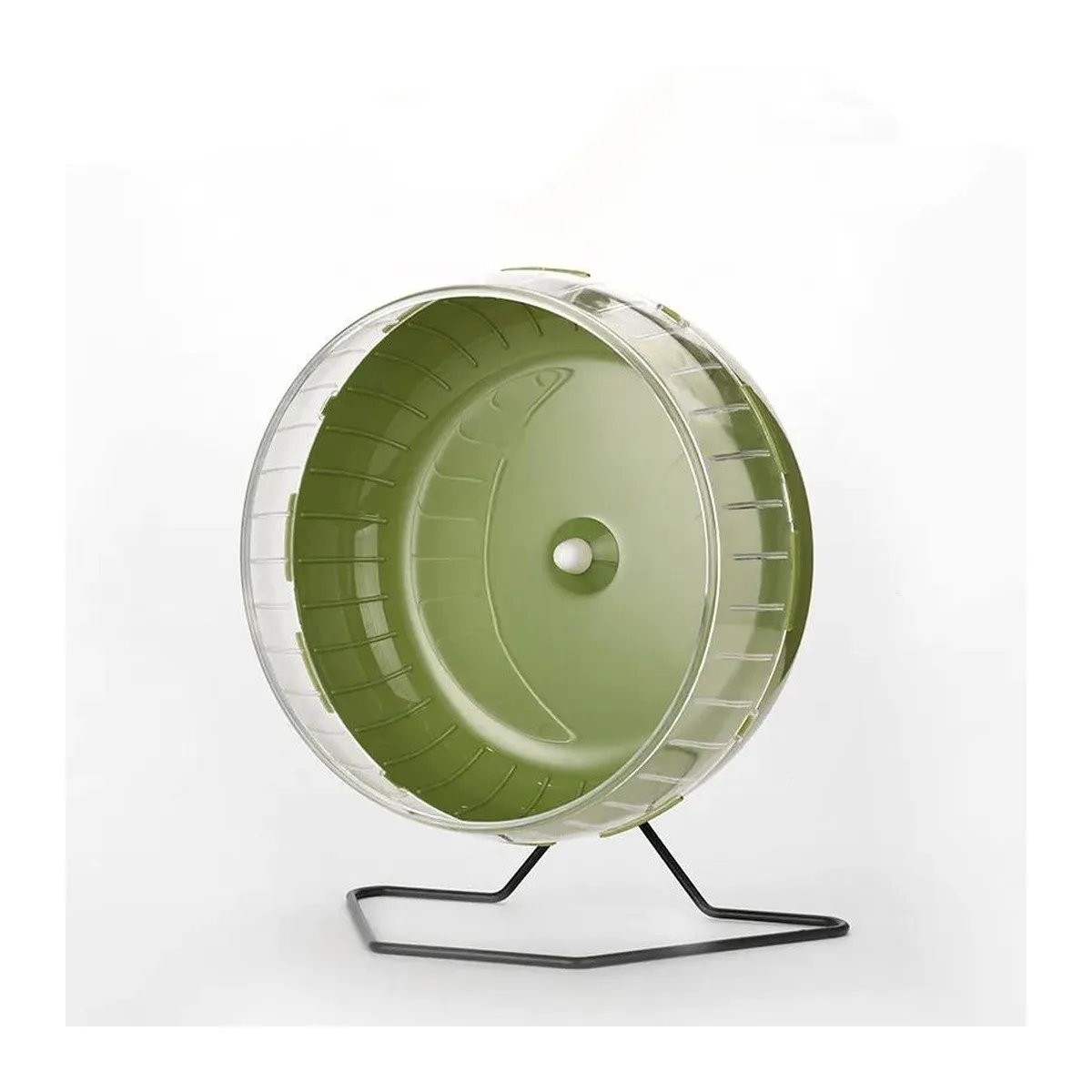
Silent Hamster Wheels — 17cm & 21cm, heat-resistant
Hamster Bedding & Litter — paper, volcanic sand
Ceramic Cooling Huts — #1 for tropical markets
All Wholesale Hamster Products — 13 products, 7 categories
Ready to order? Contact us for wholesale pricing.
First-Order Checklist for a China Sourcing Run
Work through this list before any deposit leaves your account. Confirm the supplier business license and export certificate, request recent test reports from an accredited lab, and ask for two client references in your market. Order samples of every SKU you plan to buy and compare each one against the listing photos. Write down the unit price for the MOQ tier you are actually ordering at, along with the production lead time and the carton quantity. The eight-step supplier evaluation process covered on this blog turns the same points into a repeatable form. Nothing here takes long to collect, and a supplier who hesitates on any single item has already answered the question you were going to ask.
Customs classification belongs on the same checklist. Bedding usually sits under HS 4823, exercise wheels under 9503 or 3924, and ceramic items under 6911, and the heading your freight forwarder files determines the duty your buyer pays. The World Customs Organization publishes reference material on how member administrations interpret these headings, which helps when a forwarder and a supplier give you two different answers. Keep the classification note with the invoice and packing list so the paperwork stays consistent from factory to destination port.
Carton and Label Details to Confirm Before the Balance Payment
Silent wheels move 20 pieces to a carton and the 30cm model moves 10, so a 100-piece line item of the 21cm silent wheel has a volume your forwarder can price before you commit. Paper bedding ships 20 bags in a 40x30x25cm carton, a compact cube that behaves well in a mixed shipment. Ask the factory for a photo of one packed carton with the retail label visible, and check that the label carries the English product name, the intended species, and the material statement you plan to repeat on your own shelf tags. Ceramic units should arrive foam-wrapped with roughly 3cm of cushioning inside the carton. A photo of a wrapped unit settles that argument before shipping rather than after.
Buying Factory Direct or Working Through an Agent
An agent earns a margin for consolidating goods, arranging inspections, and translating your questions into factory language. Factory direct keeps that margin with you and shortens the loop when you want a custom color or your own packaging. For a first order built around 100 pcs per SKU and a $500 mixed-order total, direct buying stays manageable as long as your spec sheets are clear. Bring an agent in when goods from two or three factories have to share one container, or when you want a local inspector watching the packing. Third-party pre-shipment inspection typically runs a few hundred dollars per visit and is easiest to arrange before the balance payment clears. The sequence stays the same either way: samples first, trial quantity next, larger reorders only after the first shipment arrives intact.