
A bad supplier costs more than a good one saves. Late shipments, inconsistent quality, and broken promises can destroy your business before it starts. Here’s how to evaluate hamster product suppliers systematically.

Step 1: Verify Business Legitimacy
Request the supplier’s business license, export license, and factory registration. Cross-reference with Chinese government databases (National Enterprise Credit Information Publicity System). Verify their Alibaba or 1688 profile. Look for “Gold Supplier” status and 3+ years of platform history.
Step 2: Assess Product Quality
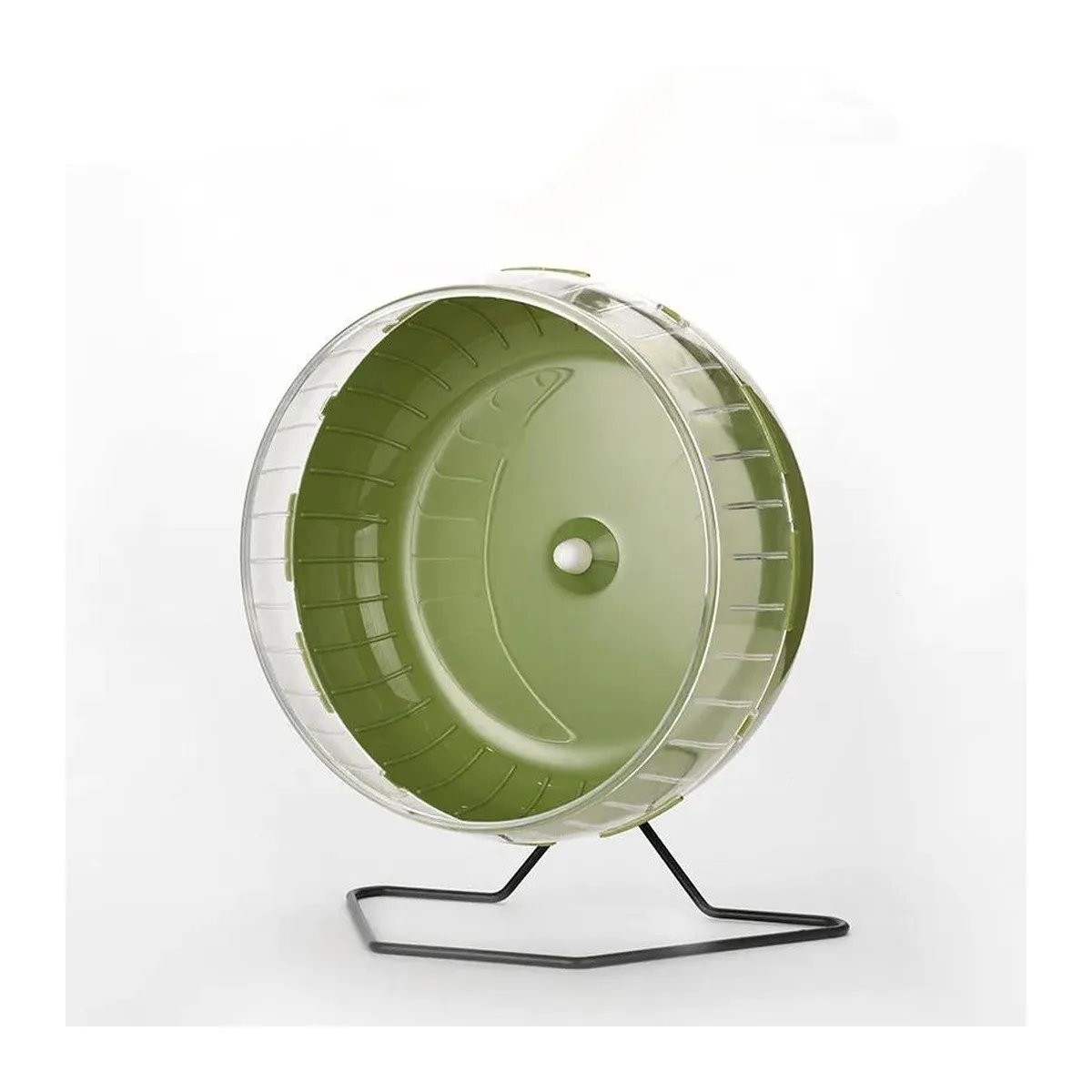
Always order samples before committing to bulk. Test for: material safety (no sharp edges, no toxic coatings), durability (does it withstand daily use?), and consistency (does the sample match the listing photos?). For ceramic products, check for hairline cracks. For wheels, test bearing smoothness and noise level.
Step 3: Request Test Reports
Ask for recent test reports from accredited labs (SGS, ITS, BV). For products sold in the EU, look for REACH and EN 71 compliance. For the US market, FDA compliance is essential for food-contact items. Never accept a supplier’s internal QC report as a substitute for third-party testing.
Step 4: Evaluate Production Capacity
Ask about monthly output, lead times, and production flexibility. Can they handle your order volume? Can they scale up if demand increases? A supplier producing 10,000 wheels per month can easily handle your 200-piece order, but can they deliver 2,000 when you grow?
Step 5: Check Communication and Responsiveness
Send an inquiry with specific questions and note: response time (within 24 hours is good), English proficiency, and willingness to provide detailed answers. Poor communication before the sale means worse communication after.
Step 6: Review Pricing Structure
Compare unit prices across 3-5 suppliers for the same specification. Be wary of prices significantly below market average. This often indicates inferior materials or hidden costs. Ask for a breakdown: material cost, labor, packaging, and profit margin.
Step 7: Request References
Ask for 2-3 existing client references, preferably in your target market. Contact them and ask about quality consistency, delivery reliability, and problem resolution.
Step 8: Start with a Trial Order
Begin with a small trial order (50-100 pieces per SKU). Evaluate the entire experience: ordering process, production timeline, packaging quality, shipping condition, and product quality. Only scale up after a successful trial.
Red Flags to Watch For
Refusal to provide test reports. Prices that change after sample approval. No physical address or factory photos. Pressure to pay via Western Union or personal bank account. Unwillingness to sign a formal contract.
Conclusion
Evaluating hamster product suppliers takes time upfront but saves thousands in the long run. Use this 8-step process to build a reliable supply chain that supports your business growth.
Browse our wholesale hamster products from verified suppliers, or contact us for supplier references.
Building a Scorecard for Supplier Candidates
Turn the eight steps into a one-page scorecard so two buyers on your team reach similar conclusions. Score each candidate from one to five on documentation, sample quality, response speed, price transparency, reference feedback, and production capacity. Weight documentation and sample quality highest, because the other four only matter once those two pass. Revisit the sheet after the trial order arrives, when optimism naturally inflates the early numbers. Three candidates scored side by side beat three separate opinions written in different email threads, and the scorecard also survives staff turnover in a way an inbox does not.
What a Sample Should Tell You
Handle the sample the way a customer would. Spin a wheel and listen through a full rotation; a sealed bearing stays quiet while an open axle announces itself. Press a ceramic bowl on a flat surface to confirm the weighted base actually resists a nudge. Fill a bottle, mount it, and leave it for a day to see whether the valve drips onto the bedding. Weigh a 1kg bedding bag against the label and shake it over a dark surface to check the dust claim. Each test takes minutes and answers questions that a spec sheet never will.
Compare the sample against the listing photos and against the samples from the other candidates. Note the differences in writing, because a supplier who has already approved a sample usually treats your written deviation list as the contract that follows. Where bulk quantities follow, the wholesale MOQ reference shows how the trial quantity rolls into a first production order.
Reading Test Reports Critically
A third-party report is only as useful as its scope. Check the issuing laboratory, the product code it covers, the date, and whether the standard named matches the destination market you sell into. Reports from SGS, ITS, and BV travel well across borders, and accreditation details appear on the front page of the document rather than in the supplier email. For products destined to the European Union, look for the REACH references your compliance officer will ask about, administered through ECHA; for food-contact items bound for the United States, ask whether the manufacturer already holds relevant FDA documentation. Never accept an internal QC certificate in place of an outside laboratory report.
Deciding When to Walk Away
Some failures are cheap to discover early. Refusal to share laboratory reports, a price that changes after sample approval, requests for payment to a personal account, and no verifiable factory address all end the conversation at step one. Slower signals deserve patience: answers that take three days, packaging photos that arrive blurred, a contract nobody wants to sign. Log both kinds in the scorecard, because the pattern carries more weight than any single incident. Walking away from a candidate who fails two documentation checks costs an afternoon; discovering the same gaps after a 500-piece deposit costs a season.