The exercise wheel is the single most important enrichment item in a hamster cage. Choosing the right wheel type affects hamster health, customer satisfaction, and your return rate. Here’s a detailed comparison.
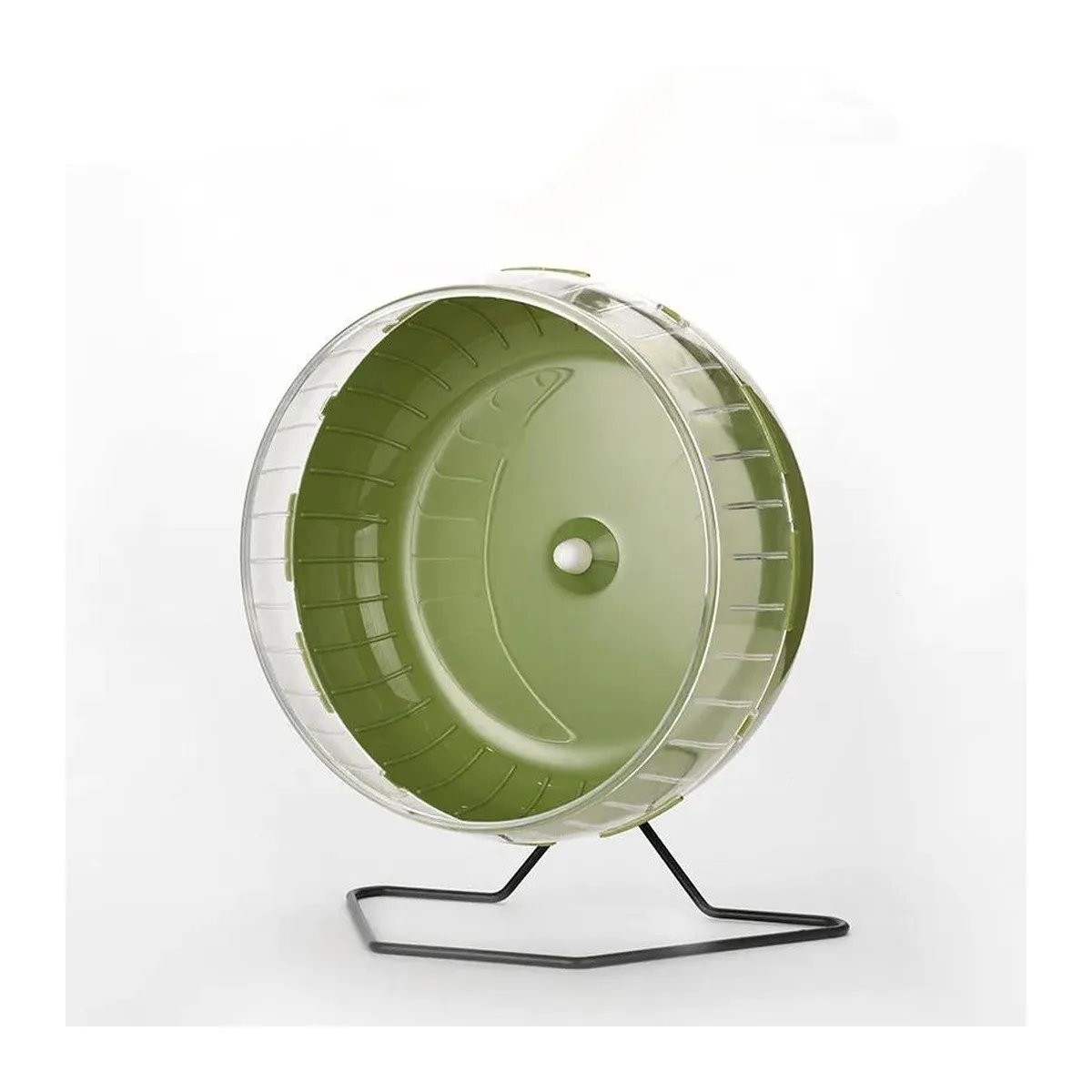
Standard Upright Wheels
The traditional vertical wheel mounted on a central axle. Sizes range from 13-28cm. Pros: widest variety, easy to clean, affordable ($3-8 wholesale). Cons: can be noisy if bearings are low quality, cheaper models may have a center bar that causes spinal curvature. Best for: budget-conscious retailers and entry-level customers.
Silent Spinner Wheels
Use a sealed ball-bearing hub or solid running surface with no center axle. Pros: near-silent operation (critical for bedroom placement), no center bar means safer spine alignment, wider running surface. Cons: higher price ($12-25 wholesale), some designs harder to attach to wire cages. Best for: premium customers and noise-sensitive households.
Flying Saucer Wheels
A tilted disc shape that the hamster runs on diagonally. Pros: visually appealing, no tail entrapment risk, available in small sizes for dwarf hamsters. Cons: takes up more floor space, some hamsters never adapt, can fling bedding. Best for: dwarf hamster owners and novelty-seeking customers.
Size Guide by Species
Roborovski Dwarf: minimum 20cm diameter. Campbell’s/Winter White Dwarf: minimum 20cm. Syrian: minimum 28cm. Using too-small wheels causes spinal curvature, a welfare issue and a liability risk for retailers.
Material Comparison
Plastic: lightweight, affordable, easy to clean. Wood (birch/apple): aesthetic, chewable, absorbs noise. Metal: durable, easy to sanitize, but can be noisy. For tropical climates, choose heat-resistant ABS plastic. Wood can warp in high humidity.
Noise Level Comparison
Standard wheel: 40-55 dB (equivalent to a quiet conversation). Silent wheel: 15-25 dB (barely audible). Flying saucer: 25-35 dB (moderate). For apartment-dwelling customers in Southeast Asian cities, silent wheels are essential.
Retail Recommendations
Stock three wheel options: a budget upright ($3-8 wholesale), a mid-range silent spinner ($10-15 wholesale), and a flying saucer ($8-12 wholesale). Display them side by side with a noise comparison sign. Position silent wheels as the “Staff Pick” upgrade.
Conclusion
The right wheel keeps hamsters healthy and customers happy. Prioritize silent operation, correct sizing, and heat-resistant materials for tropical markets.
Browse our silent hamster wheels in 17cm, 21cm and 30cm sizes (the 30cm wheel fits chinchilla, rabbit and hedgehog), or contact us for wholesale pricing.
Matching Wheel Type to Cage Type
The cage decides more than the wheel chart does. Wire-bar cages need a clamp or hook mount, and some silent designs with wide solid bases fit poorly against narrow bar spacing, so check the mount before promising compatibility. Glass tanks and plastic bases suit freestanding wheels with a stand, including the 30cm model that carries its own metal frame. Saucer designs need floor area, which they rarely get in a starter cage, and they fling loose bedding when the angle is steep. Tell customers to measure the cage footprint first and choose the wheel second. A wheel that fits the cage gets used, and one that does not gets returned.

A Sizing Script for the Shop Floor
Species first, cage second, noise third. Syrian hamsters need a wheel of at least 21cm; Roborovski, Campbell\u2019s, and Winter White dwarfs run correctly from 20cm up, so the 17cm model suits young animals and compact cages rather than adult Syrians. Chinchillas, rabbits, and hedgehogs belong on the 30cm size. Then ask where the cage stands: a bedroom or studio apartment makes a sealed bearing worth the price difference, while a garage or shop display tolerates an open axle. Three questions produce one recommendation, and the customer leaves with a decision instead of a menu of six wheels. The full wheel size guide covers the same sizing rules with the SKU codes beside them.
What to Stock in What Proportion
A first wheel order splits cleanly: roughly 40% in 21cm for the broad middle of the market, 35% in 17cm for budget and dwarf buyers, and 25% in 30cm for exotic-pet sections. Display all three at the same shelf height with a printed noise comparison so the upgrade is visible before anyone explains it. Hold the budget upright as the price anchor, position the silent spinner as the staff pick, and keep the saucer as a novelty that answers a specific request instead of a shelf staple. Revisit the split after two reorder cycles, and remember that every unit still moves at 100 pcs per SKU under the standard mixed-order rule. A shop testing the range can start with the 17cm silent wheel at that floor alongside the 21cm line.
Handling Returns and Complaints Before They Happen
Most wheel complaints trace back to one of three causes, and each has a prevention step. Noise complaints come from open-axle models sold to bedroom buyers, prevented by asking the placement question first. Sizing complaints come from a dwarf wheel bought for an adult Syrian, prevented by the species script above. Bedding gets flung by steep saucers, prevented by a warning card on the display. Put a one-line care note in the box, cleaning the bearing with a dry cloth and checking the mount weekly, and returns drop for reasons that never had anything to do with the product itself.
Comparing Materials in a Tropical Climate
Heat-resistant ABS or polypropylene gives a dense body that survives 30°C+ shop floors without warping, while untreated wood can distort in sustained humidity and metal, though durable, transmits bearing noise more readily through a loose fastener. For stock in Malaysia, Thailand, or Indonesia, lead with plastic bodies and mention wood and metal only for customers who specifically ask. That one sentence keeps warranty conversations short. Where welfare comes up in the conversation, guidance published by the RSPCA gives staff a plain-language reference on small-animal care to point at instead of improvising.