
Traditional hamster wheels with exposed axles generate significant noise: 40-55 decibels, equivalent to a quiet conversation. For customers in apartments or with light-sleeping family members, this is a deal-breaker. Silent wheel technology solves this problem.

How Silent Wheels Work
Sealed ball-bearing hub: the most common design replaces the open axle with a sealed, lubricated ball-bearing mechanism. Friction drops to near-zero, reducing noise to 15-25 decibels (barely audible). Axle-free design: the running surface sits on a wide, flat base with a concealed pivot point. No center axle means no contact noise. Magnetic suspension: high-end models use opposing magnets to levitate the running surface. Virtually silent but expensive.
Materials That Reduce Noise
ABS plastic: dense, rigid, and smooth. Reduces vibration and rattle. Wood (birch or apple): natural dampening properties. Less common but aesthetically appealing. Silicone components: used in bearing seals and mounting points to absorb vibration.
Benefits for Retailers
Higher margins, fewer returns, and happier customers in noise-sensitive markets. Silent wheels are a category upgrade any pet shop can make.
Noise Sources Inside a Wheel
Four separate mechanisms create wheel noise, and each one has its own fix. Bearing friction produces the steady hum owners hear at night, and a sealed, lubricated bearing drops it into the 15-25 decibel range where a bedroom cage stays quiet. Run-surface impact makes the rhythmic thud as feet land, which a wider continuous surface reduces compared with thin bars. Mount vibration carries sound into the cage bars, and silicone washers at the contact point absorb that path. Bedding flick adds the intermittent scratch, and no bearing fixes it; that one is a mounting and depth question. Diagnosing in this order keeps you from replacing a silent wheel when the bracket was simply loose.
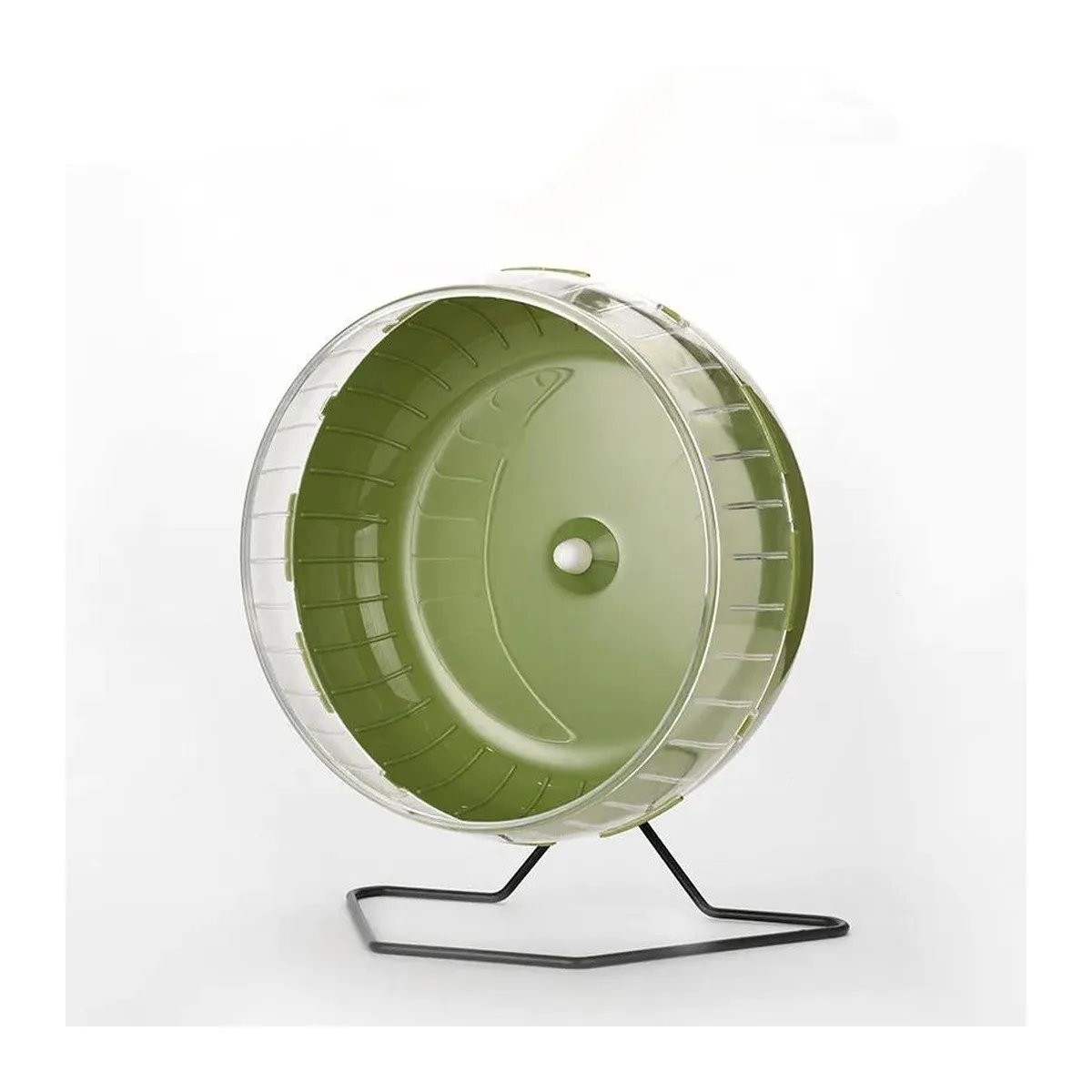
Comparing the Three Silent Designs
A sealed ball-bearing hub is the mainstream answer: proven, repairable on most models, and cheap enough to sit in the mid-price tier. An axle-free design removes the center bar entirely, so the running surface rolls on a concealed pivot and gains a safer spine path at the cost of a wider base footprint. Magnetic suspension levitates the surface on opposing magnets and reaches the lowest noise of the three, but the price and the delicate mounting keep it out of most retail assortments. For a shop shelf, the sealed bearing covers the majority of buyers. Keep one axle-free model for customers who specifically ask about the center bar, and skip magnetic units until somebody orders one by name. The full wheel size guide pairs these designs with the diameter each species needs.
Materials and Their Noise Contribution
Heat-resistant ABS or polypropylene gives a dense, rigid body that resists the rattle thin plastics develop after months of use, and it survives 30°C+ rooms without warping. Wood dampens vibration naturally and looks better in a living-room cage, though humidity works against it in tropical storage. Silicone belongs in the seals and the mount points, invisible to the customer and decisive for the vibration path. Metal stands carry bearings well and suit the 30cm size, yet every loose fastener on a metal frame is a potential click. Browse the full silent hamster wheel category to see the three diameters side by side. Specify the body material on the shelf tag, because customers comparing two wheels at similar prices rarely see a difference until someone points at it. The 21cm silent wheel page lists the body, bearing, and noise figures in one block that copies cleanly onto a shelf card.
A Shelf Test Customers Can Watch
Spin each display wheel by hand and let it coast. A healthy sealed bearing turns long and silent; an open or worn bearing stops early and hums. Bring the wheel close to a phone microphone for customers who want proof, because a decibel claim printed on a card is easy to ignore and a live demo is not. Then press the mount against the display cage and repeat, showing how silicone at the contact point changes the transfer. Two demonstrations take thirty seconds and position the silent model as an obvious upgrade instead of a pricier guess.
Matching Noise Claims to What You Sell
Keep one wording for the whole shelf. If the sealed-bearing line measures 15-25 decibels in your supplier documentation, use that band on every sign instead of quoting the most flattering number from a single unit. Consistency protects you when a customer arrives with a phone app that reads a different figure, and it makes the comparison against open-axle wheels at 40-55 decibels credible rather than promotional. Two bands, one comparison, printed once, and every staff answer agrees with the shelf. Welfare questions land in the same conversation: sustained racket stresses small animals and pushes owners to move cages into corridors where ventilation suffers, and plain-language guidance from the RSPCA gives staff a reference customers accept.
After-Sale Care Notes to Print in the Box
Three lines prevent most wheel complaints. Wipe the bearing area with a dry cloth monthly and never oil it, because oil attracts the dust that ruins a sealed unit. Check the bracket screw once a week for the first month, when plastic settles and loosens. Keep the wheel out of direct sun so the body material ages evenly. Shops that print these lines see fewer returns for noise complaints that were really maintenance questions, and the card doubles as a brand reminder every time it is handled.