
Bedding is a consumable that customers buy repeatedly, making it one of the highest lifetime-value products in your hamster section. Here’s how the three main types compare.
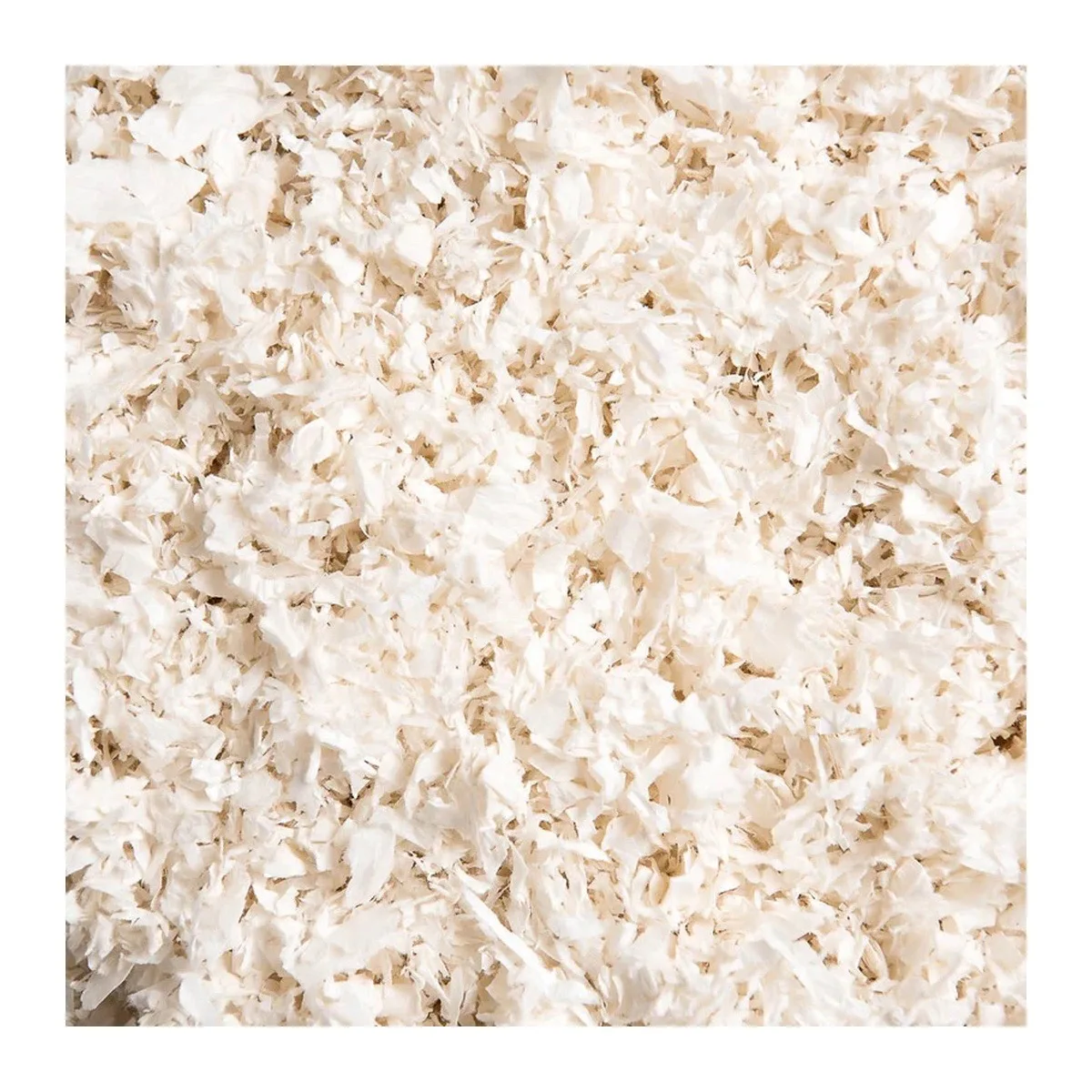
Paper-Based Bedding
Made from recycled newspaper or virgin cellulose fiber. Highly absorbent (holds 3-4× its weight in moisture), low dust, and soft. Price: $1-2.50 per 1kg bag wholesale. Best for: dwarf hamster owners, allergy-conscious households, and premium shoppers. Cons: compresses quickly, needs frequent replacement.
Wood-Based Bedding (Aspen)
Kiln-dried aspen is the only safe wood option. Pine and cedar contain harmful phenols. Excellent natural odor control, budget-friendly in bulk. Price: $0.80-2.00 per 1kg bag wholesale. Best for: cost-conscious buyers and multi-hamster households. Cons: can be dusty if not properly processed.
Hemp Bedding
Made from industrial hemp stalks. Extremely absorbent. It outperforms both paper and wood. Naturally antibacterial and low-dust. Price: $2-4 per 1kg bag wholesale. Best for: eco-conscious buyers and premium retail segments. Cons: highest price point, less widely available.
Tropical Climate Consideration
In 30°C+ climates, moisture control is critical. Wet bedding promotes bacterial growth within hours. Paper bedding’s high absorbency makes it the best choice for tropical markets. Recommend changing bedding every 3-4 days in hot weather versus weekly in temperate climates.
Absorbency Comparison
Paper: absorbs 3-4× its weight. Aspen: absorbs 2-3× its weight. Hemp: absorbs 4-5× its weight. For tropical markets, higher absorbency means less frequent changes and better odor control.
Retail Strategy
Stock all three types. Place small bags (1kg) at eye level for impulse purchases. Position large bags (5kg+) on lower shelves for repeat customers. Create a comparison sign showing absorbency ratings and price per liter.
Conclusion
The best hamster bedding depends on your customer’s priorities: paper for absorbency, aspen for budget, hemp for eco-consciousness. Offering all three maximizes your customer base.
Browse our hamster bedding supplies in dust-free paper and volcanic bath sand, or contact us for wholesale pricing. (We do not stock aspen wood shavings. Paper bedding is the lower-dust, lower-quarantine-risk choice.)
How Each Bedding Behaves After a Week
Fresh bedding tells you little; day-seven bedding is the real test. Paper holds its structure and keeps absorbing until the surface feels damp under a finger, then compresses and needs a full change. Aspen stays loose longer and masks odor with its own scent, which some buyers like and others read as smell. Hemp stays crumbly and separates waste cleanly, which makes spot cleaning easiest while pushing the price per bag highest. Walk customers through that week-one picture instead of the bag artwork, and the premium on hemp or the savings on aspen both become rational choices instead of guesses. Stock the proven line from the dust-free paper bedding page where the absorption figures sit next to the pack size.

Building a Comparison Sign
One sign, three columns: material, absorbency, price per litre. Paper absorbs three to four times its weight, aspen two to three, hemp four to five, and the wholesale price bands run $1-2.50 for paper per 1kg bag, $0.80-2.00 for aspen, and $2-4 for hemp. Add a fourth row for dust marked low, medium, or process-dependent, because dust is the complaint that sends customers back. Laminate the sign and keep a small open sample of each material under it; buyers trust what they can pinch. Position small 1kg bags at eye level for the impulse purchase and stack 5kg sizes lower for the refill customer, since a shelf tag linking absorbency to cleaning effort does more work than a discount sticker on the same bag.
Storage Rules for a Humid Warehouse
Paper bedding drinks warehouse humidity the same way it drinks cage moisture, so keep deliveries off the floor on pallets with airflow around each carton, and clip opened boxes shut between uses. A digital hygrometer on the shelving costs little and warns you when the aisle crosses 60% relative humidity, the point where unsealed stock starts gaining weight and compacting. Bath sand behaves differently and clumps from airborne moisture, so sealed bins matter more for sand than for bedding. Sea freight adds weeks of humidity exposure before stock reaches the shelf, which makes the receiving check worth doing every time instead of only when a carton looks damaged. The storage habits in the mold prevention guide extend the same rules from warehouse to shop floor.
Answering the Quarantine Question
Rules around wood shavings vary by country, and retailers in the region occasionally meet customers whose previous shipment of pine-based bedding was held or refused. Paper avoids that conversation entirely because it contains no wood material and no phenols, and it releases none of the aromatic compounds that softwood shavings carry. Train staff to answer with the material difference instead of a guarantee about regulations they do not control, and offer the paper bag as the default with other materials as the informed alternative. Shoppers who arrive for the environmental angle can be shown the recycling and waste material published by the US EPA, which gives the recycled-paper claim a public source.
Reorder Cadence for a Consumable
Bedding reorder timing follows the cleaning advice you give customers: a full change every 5-7 days at tropical temperatures means one hamster household works through roughly a kilo a week. Multiply that by your active customer count and you have a volume forecast before your own shelf moves. Sell a second bag at the counter when the first is scanned, and the refill rhythm becomes store revenue instead of a trip the customer forgets on the way home.