
 English
 Bahasa Indonesia
 ไทย
 Bahasa Melayu
 Tiếng Việt
 Filipino
 Português (Brasil)
Selling pet products in Southeast Asia means getting the paperwork and the packaging right before stock leaves the factory. This guide covers what importers should prepare for labeling and packaging compliance, using the rules and product data that matter for hamster supplies shipped to Malaysia, Thailand, Indonesia, the Philippines and Vietnam.
What Customs and Regulators Check
Every shipment is classified under an HS code that sets the duty rate. Hamster bedding usually falls under HS 4823, exercise wheels under 9503 or 3924, and ceramic products under 6911 or 6914, with rates from 0% to 15% across the region. Products that touch food or water carry extra documentation: ceramic bowls and water bottles may need Thai FDA testing ($300-800 per category, 7-14 working days) or Indonesian SNI certification ($500-1,500, 14-30 days), while Malaysia follows MS 2560 with lenient enforcement for small first orders. Ask your supplier for the test report covering your product before the first shipment.
Information Your Labels Should Carry
Print the product name, SKU, contents with quantity, material and country of origin on every retail unit, and keep the wording identical to your invoice and packing list. Confirm the local language requirements for each target market with your freight forwarder before printing, because label language rules differ by country and change from time to time. Consistent labeling also speeds up customs clearance when descriptions match the commercial invoice word for word.
Packaging Standards for Safe Transit
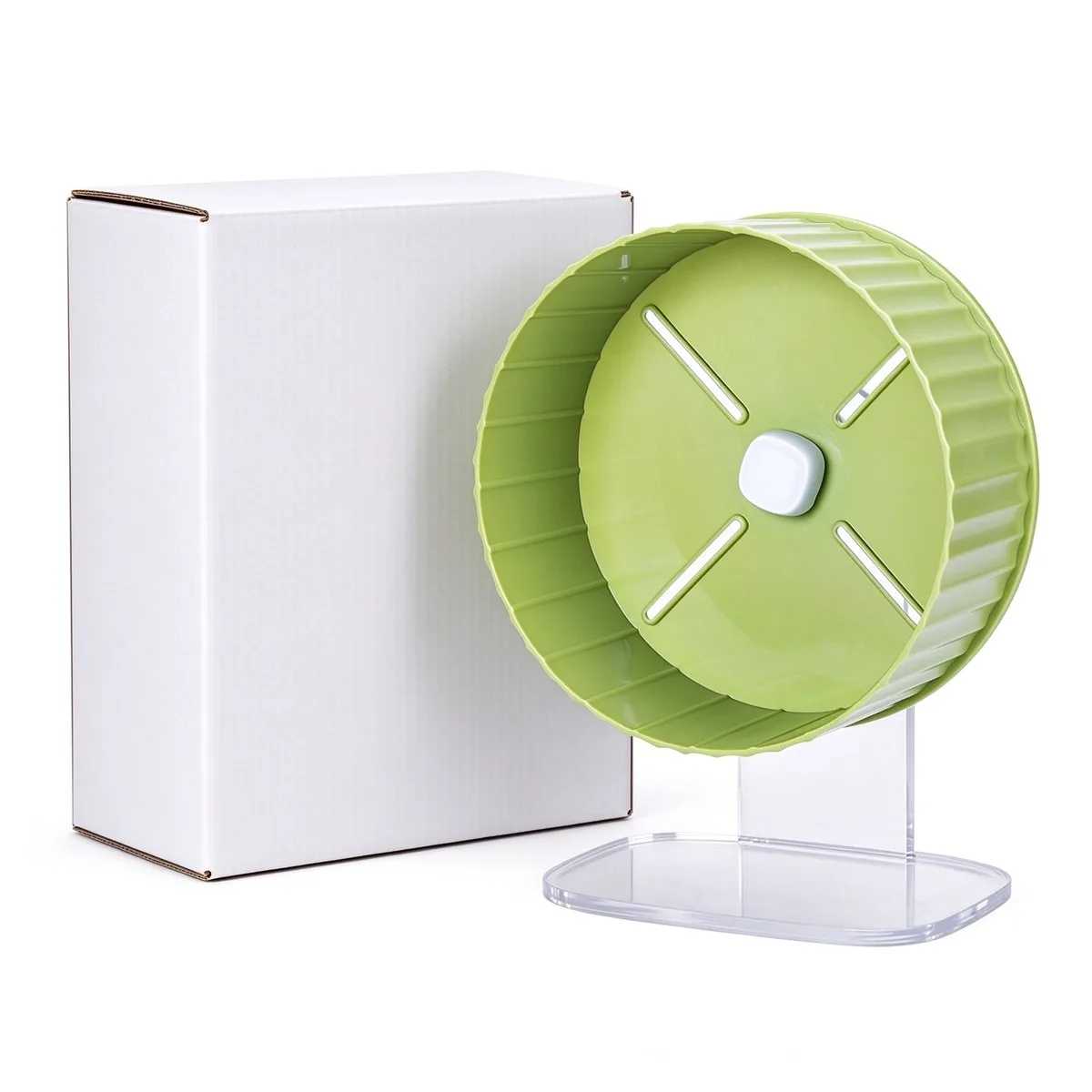
Ceramic items ship with foam wrapping and about 3cm of cushioning inside the carton. Paper bedding travels best in vacuum-sealed moisture-barrier bags for sea freight, and bath sand ships in sealed inner liners. Carton contents follow the factory standard: silent wheels pack 20 pieces per carton, the large 30cm wheel 10 pieces, and mixed containers are welcome as long as the total reaches the $500 minimum. Good packaging is also a compliance signal: intact labels and undamaged units are what inspectors and retailers expect to see.
Documents to Prepare
For most hamster supply shipments you need a commercial invoice with product descriptions, quantities and unit prices, a packing list detailing each carton, and a Bill of Lading or Airway Bill. Your supplier provides all three; a freight forwarder handles the customs submission. Keep the HS code, certification reports and label proofs together in one folder per shipment, and the whole file is ready in minutes when a buyer or authority asks.
A Label Proof Workflow
Draft the label text once and route it through the same checks every time, so a reprint cannot drift away from the version that cleared customs.
- Write the product name and SKU exactly as they appear on the invoice.
- Send the draft to the freight forwarder to confirm the local language requirement of each target market.
- Print one proof unit and photograph it beside the outer carton mark.
- File the approved artwork with the shipment folder so the next run prints from the same file.
Carton Marks to Agree in Advance
Agree the outer carton marks with the factory before production starts: product name, SKU, quantity per carton, and destination. Quantities differ from line to line, and the carton mark is what a receiving warehouse checks against the packing list, so an incorrect figure on the face of the box is caught before the pallet reaches the sales floor.
Keeping One Folder Per Shipment
Name the folder with the shipment reference and the date, then drop the commercial invoice, packing list, Bill of Lading or Airway Bill, HS code note, certification report and approved label proof inside it as each one arrives. Store the previous shipment folder alongside the new one, so a repeat order can be produced from a known file instead of being rebuilt from memory.
Common Printing Errors
- A SKU on the label that disagrees with the SKU on the invoice.
- Quantity per carton corrected on one face of the carton and missed on the other.
- Local language added after the print run has already been released.
- A superseded artwork file used for the reorder, leaving two batches looking different on the shelf.
The certification guide covers the documents that travel with the labels, and the import tax guide explains how a matching description affects the duty entry.
Handing Artwork to the Factory
Send label artwork as a locked file with the product name, SKU and quantity per carton fixed inside it, and ask the factory to return a photograph of the first printed run before releasing the rest. Confirm in the same message that the retail unit label and the outer carton mark use the same wording, since a mismatch between the two is what an inspector notices first. Reprints should come from the stored file rather than a fresh layout, and each approved version should carry a date in its filename so a reorder never picks up a superseded one.
Two references help when a market’s wording changes between orders. ISO publishes the terminology and labelling standards buyers often cite in a purchase contract, and EUR-Lex is where EU packaging and labelling acts are published in full text.
Related Wholesale Products
- Ceramic Cooling Hut (H01) — glazed ceramic, foam-wrapped for export
- Silent Hamster Wheel 21cm (W01) — carton-packed, CE-marked line
- Wooden Toy Set Platform Ladder Swing (T02) — untreated kiln-dried wood
- Digital Thermometer Hygrometer (E01) — retail-ready packed single unit
Want the full compliance checklist for your first order? Contact us and we will send labeling and packaging details for your market.