
Understanding Minimum Order Quantities (MOQ) is essential for any retailer sourcing hamster supplies in bulk. This guide explains typical MOQs by product category, how to negotiate lower minimums, and how to calculate your ideal order size.
What Is MOQ?
MOQ is the smallest quantity a supplier will accept for a single order. It exists because manufacturers need to cover setup costs: molds, material sourcing, and production line configuration. Generic suppliers quote MOQs anywhere from 100 pieces for simple accessories to 2,000+ for custom OEM runs. HamsterSource uses one standard instead: 100 pcs per SKU.
MOQ by Product Category
At HamsterSource every category carries one standard: 100 pcs per SKU. Bedding and litter, wheels, ceramic hideouts, feeders, water bottles and chew toys all start at 100 pcs, so a mixed order never needs per-category minimums. Generic factories do quote by category and pack size, and custom branding usually adds 30-50% to minimums. Compare that against one number when you collect quotes.
How to Negotiate Lower MOQs
Strategy 1: Combine SKUs. Ask the supplier to accept a combined order across multiple products. Example: 200 wheels + 200 huts + 200 bottles instead of 500 wheels alone. Strategy 2: Offer higher unit price. Some suppliers will reduce MOQ if you accept a 10-15% higher per-unit cost. Strategy 3: Use stock designs. Custom colors, logos, or packaging increase MOQs significantly. Start with standard products, add customization later. Strategy 4: Build a relationship. After 2-3 successful orders, most suppliers will lower MOQs for trusted buyers.
Calculating Your Ideal Order Size
Formula: Monthly Sales Velocity × Lead Time (months) + Safety Stock = Order Quantity. Example: If you sell 50 ceramic huts per month, lead time is 2 months (production + shipping), and you want 1 month safety stock: 50 × 2 + 50 = 150 pieces per order.
Cash Flow Planning
Large MOQs require upfront capital. Standard payment: 30% deposit with order, 70% before shipment. For a $3,000 order, you need $900 upfront and $2,100 before shipping. Plan your cash flow carefully. Don’t tie up all your capital in a single order. Keep 30-40% of your budget as reserve for unexpected costs.
MOQ and Shipping Costs
Larger orders reduce per-unit shipping costs. A 100-unit air shipment might cost $6/kg, while a 500-unit shipment drops to $3-4/kg. Sea freight becomes viable at 500+ units, cutting costs to $0.5-1.5/kg. Calculate your total landed cost (product + shipping + customs) to determine true profitability.
Conclusion
Mastering MOQ negotiation is a competitive advantage. Start with realistic sales projections, negotiate combined orders, and build supplier relationships over time. As your volume grows, your MOQ leverage improves, and so do your margins.
Browse our wholesale hamster products with MOQs starting from 100 pieces, or contact us for custom order quantities.
Worked Example: Building a Mixed First Order
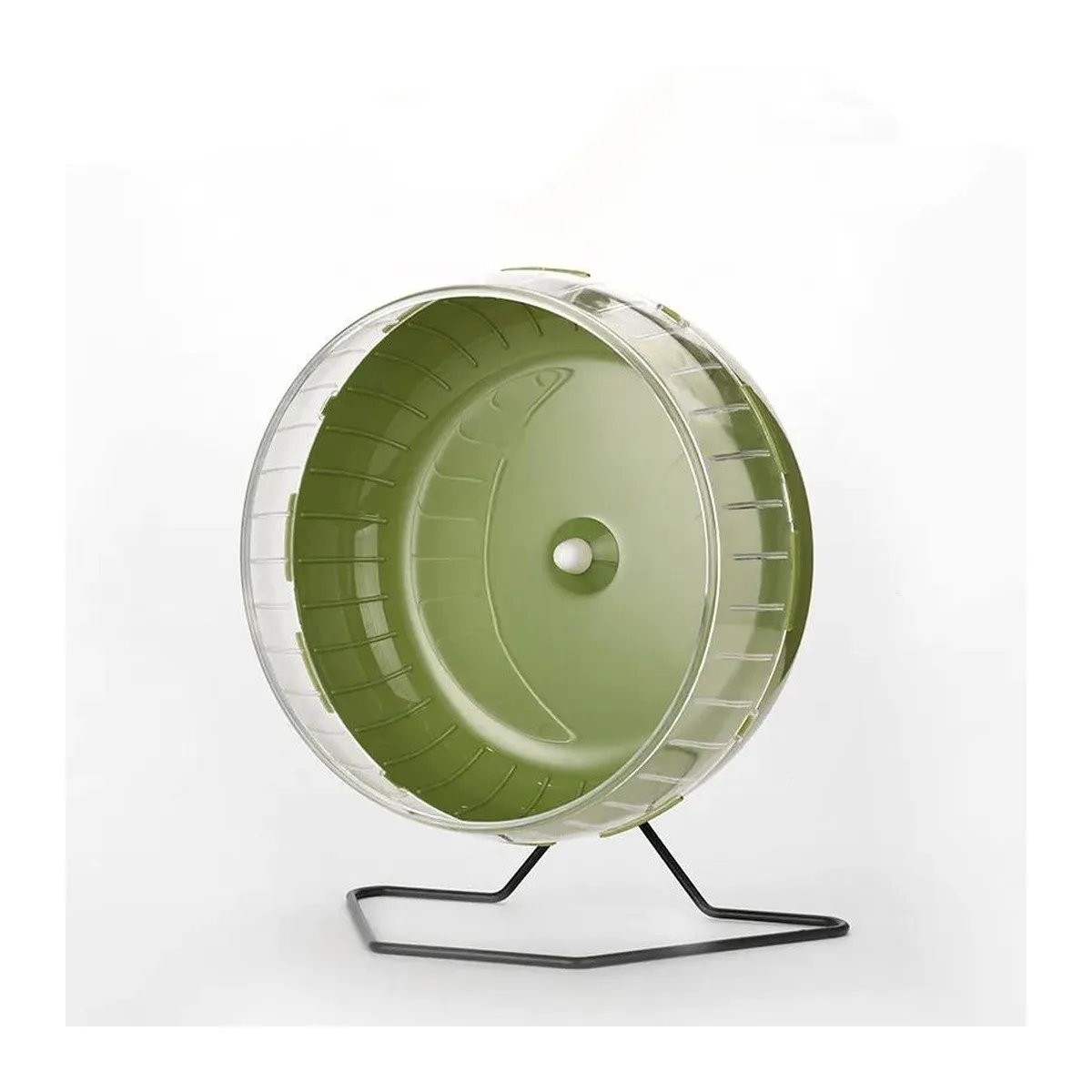
Take a shop that wants to test five lines at once. One hundred 21cm wheels, one hundred 17cm wheels, one hundred ceramic cooling huts, one hundred water bottles, and one hundred chew toy sets clears the per-SKU minimum on every line while reaching the $500 mixed-order total that turns a quote into a valid order. Add two hundred bedding bags if cash allows, because bedding generates the repeat orders. The point of the mix is exposure: five SKUs tell you which two deserve a 500-piece reorder, while a deep single-SKU order tells you only whether that one product found a buyer. The complete wholesale MOQ guide works through the same arithmetic with more SKU combinations.
Matching Order Size to Shipping Mode
Order quantity and freight mode are one decision, not two. Below about 500 units or 200kg, air freight at $3-6 per kilogram usually beats the slower sea option once you count the cash tied up in transit. Above that line, sea freight at $0.50-1.50 per kilogram cuts the landed cost per unit sharply, which is exactly when a larger MOQ stops being a burden. Express courier at $8-15 per kilogram stays reserved for samples under 10kg. Run all three quotes on the same order volume before signing anything, and remember that the cheapest freight per kilogram can still lose when your shelf sells out during the 15-25 day sea transit.
When a buyer asks what duty applies on arrival, the US tariff tables published at HTSUSITC are a readable example of how classification headings and rates are presented. Your forwarder still applies the local schedule, but the reference makes the conversation with that forwarder much shorter.
Tier Pricing and When to Jump Tiers
Standard pricing covers 100-499 pieces, 500-999 takes 5% off, and 1,000-4,999 takes 10%, so the real question is whether the next tier beats the extra stock risk. Work it through with one SKU: if a wheel sells steadily and the 5% saving pays for the warehousing of four extra months of stock, move up; if the item is a seasonal seller, stay at the MOQ floor and keep the cash. Long-term buyers can also negotiate lower minimums after two or three clean orders, which is usually worth more than chasing a tier discount on a product you have not proven yet. Written tiers keep supplier comparisons honest, so ask every candidate to state theirs the same way your wholesale terms do.
What to Send Before Asking for a Quote
A quote request that comes back usable includes the SKU list with quantities, destination city and postcode, preferred Incoterm, whether packaging must be plain or printed, and the target delivery date. Attach a photo of your shop shelf or an existing product you are replacing so the supplier understands the category. Requests with those five fields get priced in about 24 hours; vague requests spend a week in email while assumptions multiply on both sides.